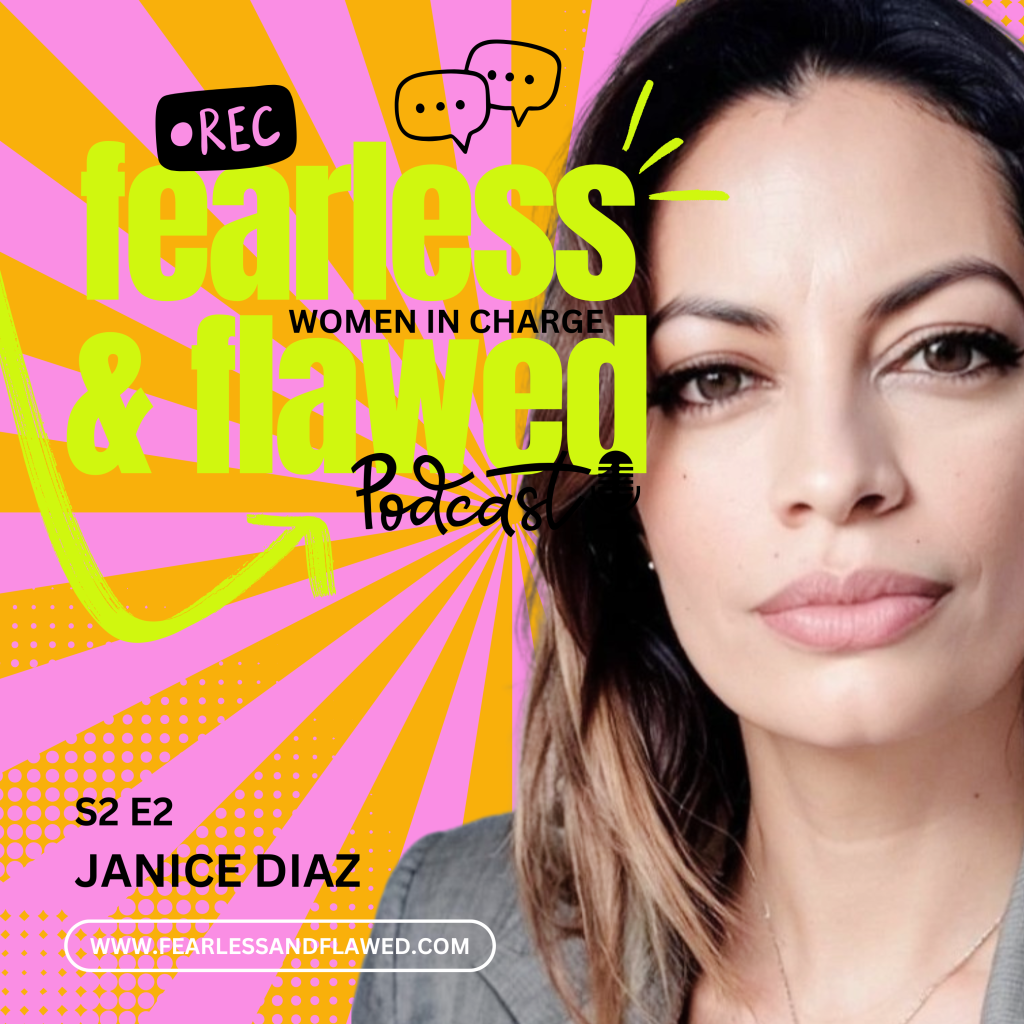
Perfectionism, Grit, and the Path to Reinvention
From teen motherhood to global consultant, Janice Diaz shares how grit, grace, and unapologetic truth-telling shaped her journey in financial services—and why thriving means giving back.
Janice’s story begins in New York, where she became a mom at 19 and quickly learned to survive in a world that wasn’t built to make room for her. With no college degree and plenty of “no’s” along the way, she carved out a career through bold moves, relentless learning, and a refusal to quit. That path took her from ice cream trucks and temp jobs to VP-level leadership, expat life in Europe, and now consulting with advisors and entrepreneurs across the globe.
But her journey isn’t just about business milestones—it’s about resilience. About being the Latina woman in male-dominated boardrooms, about holding a family together through addiction, about battling perfectionism born from survival. It’s also about joy—the village in Cyprus where she collected eggs and olive oil from neighbors, the pride of seeing her daughter thrive, and the freedom of building work and life on her own terms
"Behind every ‘no’ I’ve ever heard was a reason to build my own ‘yes.’”
Janice Diaz
Transcript
Sara Ferrer: [00:00:00] Welcome to Fearless and Flawed. Today's guest is Janice Diaz, a powerhouse in financial services, a growth coach, and an unapologetic truth teller who's been breaking rules and building businesses for 25 years from single motherhood. At 19 to VP level leadership, Janice brings a story of grit, grace, and reinvention.

Serena Reynolds: And I'm Serena and I help bold leaders become the go-to experts in their space.

Sara Ferrer: And I'm Sara, an email marketing pro here to convert clicks into cash. Together, Serena and I are two women in charge, digging into the fearless, the flawed, and the fabulous journeys of female founders rewriting the rules.

Serena Reynolds: So let's dive in.

Serena Reynolds: Hi Janice, and welcome to our show.

Janice Diaz: Thank you. Thank you for having me.

Serena Reynolds: So you've had a world journey [00:01:00] up until this point. Um, starting in finance by accident, raising a daughter at 19, and now coaching and consulting globally. Where does that fire come from? What spurred you on to take on so much here.

Janice Diaz: Well, the fearlessness part pretty much came from the, the childhood, which is pretty much where any fuel I think comes for any of us.

Janice Diaz: And so in my childhood, I had a divorced family at seven, and then my mother remarried and had three children pretty fast. And somewhere in between there, you know, I was a young girl growing up without a dad and there were issues. Around the family, and so I had to survive, you know, different things, whether it was physical or or mental.

Janice Diaz: And so. What I found for me was I developed this perfectionist attitude and so I was great in school and I was great at dance [00:02:00] and I was just great at everything to be great at something to feel, you know, good. And so. That energy has really fueled everything that I've done pretty much, you know, it's helped me open business, it's helped me raise a door young.

Janice Diaz: It's helped me do a lot of different things because it's something that I, you know, I just kept doing. Not that it was the, probably the, the best mental thing to do, but at that time it was a survival mode, you know? And so I think that's pretty much where I got that. Which is tough to say because I never really say those things.

Janice Diaz: You know, those things stay kind of in a closet somewhere, but I figure, you know, if we're gonna talk about fearless and and flawed, well, you know, that's that. I love that.

Sara Ferrer: Yeah. Yeah. It's your journey. I think, you know, something really important is that I think sometimes in business, you know, there is the image of who you wanna be.

Sara Ferrer: And what you wanna present. And then there's the reality, kind of like you see [00:03:00] on social media. So I think, you know, the reality is a lot of people who have that won't stop, won't quit. You can't tell me no attitude. Usually have some experience or some history. Constantly being told no. And not just in a business setting, but in a life setting or in a neglectful way.

Sara Ferrer: So I, I appreciate that kind of coming from that angle. 'cause I think it's very relatable. And how did you know, we know the fire, where it came from. So now walk us through how that connects to, I have this fire career, motherhood, I'm gonna conquer the world. Where did it start?

Janice Diaz: So it's, it started fairly young.

Janice Diaz: I was working on an ice cream truck at 11 years old, you know, because by then I was like, all right, I need to be an adult, because clearly those adults, you know, have their thing going on. And so that, I started working at 11. On, on, in New York, we have Mr. Softy. It's, it is very well known. And so my uncle had a truck and I was [00:04:00] like, okay, I'll work here.

Janice Diaz: Then my other uncle was a doctor, and so by 14 I was working in the office answering phones and stuff. And then I had my daughter when I was a month shy of my 19th birthday. I stayed with her for about two years before I started working. And then I went to work at a laboratory. Um, and at that laboratory, I, I was not a, a permanent employee, I was a temp, and so I got paid a little bit more.

Janice Diaz: But I didn't get paid off my time off and stuff like that, especially, you know, with a, with a young kid. So I had to be very bold in what I did because I didn't have. College or any type of university. And in New York, it's not that easy to get a job if you don't have something going on, a decent job, you know?

Janice Diaz: And so at that laboratory, at that, I was probably 21, 22, I started working in each department so that I could understand different things. So everywhere that I've gone, I've pretty much, because I had no degree, I've had to just learn different things and [00:05:00] that's why I can wear so many hats. So the fuel really at that age was I had to support my daughter.

Janice Diaz: And so I was also married at that age to someone who had a long history of addiction. And so. I was married, but I also once again, had to kind of be the man of the house, you know, and, and make sure everything was taken care of. And so the only thing as usual that I could do was be really good at like school or my job so that I could keep going and keep going.

Janice Diaz: And then this way, at least I was somebody, whatever disaster was going on, and I had to do that for my daughter who. When she was a teenager, she was like, I didn't know any of that was going on. I was like, great, and I did my job because I didn't want you to know what was going on. But so that, that's where that comes from.

Janice Diaz: I think it's just that you have to provide that support.

Serena Reynolds: Serious power there. I mean this, I mean a lot of us like [00:06:00] moan about life situations and stuff, but you really kind of went through a lot young, was it out of your control? So you controlled what, what you could and pushed through and I think that's, that shows so much grit there.

Janice Diaz: You have to be lucky also, I think I was very lucky because I, I, I really had like two different types of family and so I had a lot of support and there may have been neglect in some areas, but there was a lot of support and a lot of push in academics and sports and things like that. Things that could excel at, I was in, in dance very young and so by the time it was actually.

Janice Diaz: Five years old. I had already done a show at the Beacon Theater in New York, and years later I, I have a friend in, in tv, John Gel sang and he was performing somewhere and he was like, you know what, Janice is actually the biggest star here because she's already done a, a big, you know, venue. And I was like, that's so cool.

Janice Diaz: You're like, here's a girl who went through so much, didn't have college, didn't really have, you know, stuff. [00:07:00] But here I am and like people have some respect for me, which is kind of what you really want when you go through things.

Serena Reynolds: The thing is education at the end of the day is just pieces of paper to show how smart you are.

Serena Reynolds: It doesn't really prove anything, doesn't really amount to anything, especially as you get older anyway. I mean, I can't even remember my results, if I'm honest with you now. It was so long ago. Um, and it's now just history and. Right.

Janice Diaz: But in places like New York, it matters when you wanna work. So mer good because, well,

Serena Reynolds: it's hard starting, isn't it?

Serena Reynolds: Yes. It's hard getting your foot in the door. That's always the hardest move. I mean, I'm not New York, but I am London, so I get it.

Sara Ferrer: So how do you do that? I mean, I guess like, so up to this point, like you're working these temp jobs, like I'm following the story, but how, where do you get your big moment? Like where it's like, hey, I can, I gotta prove myself in a.

Sara Ferrer: In a, in a job, a career that [00:08:00] has longevity that can get me. 'cause it sounds like up to this point, you're making it work, you're figuring it out, but you have the childcare issue where it's like, I have this, you know, this child. Um, when do things start to come together where it's like, okay, I know I don't have a college degree, but I now have this title or this foot in the door to start proving myself.

Janice Diaz: So I would say that when I realized it was probably just, I don't know, 15 years ago, but through everything that I was going through, I was already, you know, working with CEOs and I was already having different titles in, in financial services. And so I, I saw the movement, I was running the, uh, conference, which is a huge undertaking.

Janice Diaz: Um, and so I saw it. But I was still a woman in financial services who didn't have a degree, who was Latina, you know, who has a young kid. And so there were different, you know, levels. I was just [00:09:00] surviving, I think, until I saw it, which was when, probably when we, when I moved overseas to, to start working with expats.

Janice Diaz: Um, and, and then there finally I hit the six figure mark and I could afford a graded apartment and, you know, like I was just doing my thing. And so that's. That's when it, you know, hit me like, you know, I, I, I did something, you know, I, I, I knew when I, my daughter graduated that I did something. But this feeling of like in professional world didn't hit me probably until 12, 15 years ago.

Sara Ferrer: Were you in Italy? So you mentioned you moved to Italy at some point. Were you in Italy at this point or

Janice Diaz: So when I came to Europe, I started in Amsterdam. So I lived in Amsterdam for four years, which in itself was just an amazing experience, you know, for me, my, my, my family who would come visit everybody was like, wow, you know, we're, we're, we're in Europe now.

Sara Ferrer: How'd you get there though? Like what, what was that link? Like? What, what job did they send you there for? Like six month gig or This is like a permanent [00:10:00]

Janice Diaz: So what, what happened was that when, when I got in financial services, I had met a really, really dear friend who's a friend of mine until now. And so that's a almost 30 years and.

Janice Diaz: He had a firm and he wanted to start servicing expats in, in Europe or around the world because the banks were closing the accounts for the Americans and FCA and FA and everything that was coming up. And he was like, there's an opportunity now. We were in the middle of a great opportunity in the States because I was working with law enforcement there, meaning I, I had.

Janice Diaz: Great relationships around the country with union presidents and you know, just a lot of different people. And so that was our thing there. And in the middle of that he was like, there's a bigger opportunity out there. And so I said, you know, I'm living in Miami. I am driving the nice car, I have the nice place.

Janice Diaz: You know what's on the table. Clearly I wanna move, but I, I, I don't wanna just move for a year, you know, I want to go. And so, okay. You know, [00:11:00] we'll bump you up to here, we'll move you, and we're definitely doing, you know, three, five years, 10, whatever, whatever it's going to take. And so when we got there. I started building out financial education marketing for expats, and through that we were able to generate a lot of different relationships and clients.

Janice Diaz: And then I started meeting more advisors and presidents of networks. And then it was like, boom, my, my network just grew a clo across the globe. And so then I was like, okay, like, you know, I'm good. But after being with that firm in Amsterdam for four years, they broke up. Sort of. And so it kind of left us all wondering what we were going to do next.

Janice Diaz: And so then I looked back at everything that I had done and I said, well, I'm a consultant because if I'm having a conversation with somebody and I'm seeing it from here, no disrespect, but. I'm a consultant. And so, you know, it took, it's taken a while to really feel like that [00:12:00] because I was also, because of my history used to just saying, okay, whatever you need, and just going all in and, you know, and, and it took a while for me to earn my, my respect also as a consultant because I won't work with certain clients and I, I won't do certain things that, that I had to do before just to keep moving around, you know, up the ladder.

Sara Ferrer: Wow. So it sounds like. It sounds like you kind of created this momentum, you created this network, and then you threw the expat thing into it, which, which I wanna touch on, right? Because like now you have these financial services. Walk me through when you say financial services for expats, gimme like a concrete example for our listeners who can be like, oh, okay, that's what it means.

Sara Ferrer: What is that looking like?

Janice Diaz: So I work with advisors who do cross border advice. So that's like, let's say a British person moves to the United States and they wanna transfer their British pension over there, that that's something that they could do. Us person lives in France has property in the United States.

Janice Diaz: How do [00:13:00] we handle that? The, the IRS is always on us, and so. We focus on American expats. And so, which is great for me because I'm living that American expat life, so it's great when I write things or, you know, I, I speak to advisors who tend to be cross border, meaning from the UK or Europe or somewhere outside of the us and I can help them understand what an American, you know, talks like and, and what they expect when they're talking to a financial advisor and things like that.

Janice Diaz: I've built a lot of financial education, you know, and, and so that means that we're servicing Americans overseas or expats in the United States because of their tax issues and their, all their cross border issues. So I do the marketing and the business development and the MarTech for the advisors. I'm not an advisor though.

Sara Ferrer: So what stories you got? Because I feel like this is like a really juicy, right? This is where we're like, tell like there's a lot [00:14:00] of travel going on. There's a lot of expat situ, you know, this is a very common theme we have with a lot of our, a lot of our guests in the current environment. Right? Right. So like, have you noticed.

Sara Ferrer: Anything like, you know, in your experience dealing with, especially you said American expats, just, you know, I know business-wise what you've been doing, but are there, is there some personal growth? Was it, were there some aha moments? Some like cultural clashes of like, well, hey, you're, yes, I'm American. But you're coming in very one-sided American.

Sara Ferrer: That's not how they do things here. Like did that cause a little bit of conflict within yourself because you're like, ah, like who do I defend? Did the Amer, the Americans have a point, but the European tell us, walk us through that, that that drama.

Janice Diaz: Perfect example is a year or two into being in Amsterdam.

Janice Diaz: And you know, the Dutch are, are kind of like New Yorkers, no wonder, you know, with our history. But they're very bold and then, you know, and so it was Trump against Hillary. And [00:15:00] so I can't tell you how many times people were like drinking a beer around me or just hanging out and they'd be like, they lean in and be like Trump or Hillary.

Janice Diaz: Really, you don't want my answer because whatever I say, you know, you, you're gonna turn it. And I really don't like to talk politics, but that was one thing that I was like, please. And, and me and my other expat friends, um, from the states, we'd be like, why do they keep asking us, Trump or Hillary? And it was so weird.

Janice Diaz: They, they'd always do the same thing. Lean into

Serena Reynolds: so that was one thing. It was a big topic called across, what can I say? We were all sitting there going. Like we, we were literally biting our nails. We have no say. We know it's gonna affect us. We know we're gonna be dramatically affected. So, yeah, I mean,

Sara Ferrer: wow.

Sara Ferrer: So you were like the voice of, and like, what about like movie? You said you were in Instagram for five years, like right. Five years. Am I wrong? And then you moved to Italy like four years. Yeah. What's the work environment?

Janice Diaz: Then I moved to Cyprus after that.

Sara Ferrer: [00:16:00] That must be, yeah, three massive culture

Sara Ferrer: changes there.

Sara Ferrer: Wow.

Janice Diaz: And then I lived in a very small Greek village and there was like four of us, but my olive oil came from the village and my eggs came from the village. And here's a girl from New York City. I'm like, oh. This is cool. But then after uh, two and a half years, I was like, this is retirement life. I wanna get up and go.

Janice Diaz: What I forgot to tell you in the beginning was that I went to five different elementary schools because my mom and dad were in, you know, always kind of breaking up and so we'd move out and stuff. And so by nature, I, I like to move around a lot and so, and jump into different experiences. And so yeah, I went from, you know, Dutch to trying to learn Greek and just, you know, the food and everything, and it was just great.

Janice Diaz: I was on the Greek side of Cyprus and then I ended up in Italy.

Sara Ferrer: Wow. And Italy, I'm assuming for work, for a job, or is that more of a, hey, I'll find a job once I'm in Italy, [00:17:00] or was it a direct link for the financial services job?

Janice Diaz: Uh, no, so it was a romantic thing. So I married an an Italian and so initially.

Janice Diaz: We were going to go off to Latin America probably, and you know, because I'm ready to move on, you know, and he's grown up here and so I figured we'd go to Latin America, but we're still here. So I don't know when that's gonna happen, and I'm sure it will happen eventually.

Sara Ferrer: Wow. I mean, I feel like this is, you've dabbled a little bit, right?

Sara Ferrer: Or a lot, I should say, in these different locations and these different cultures. How has that affected your work? You know, how is that like. The work style, the what success looks like, the pressure you put on yourself, has it increased with, depending on the culture, has it decreased? You're in Europe now, what is Yeah, I mean, I just, right, because it's like not just the physical change, you've been to all these different places and Amsterdam, you know, the Dutch are very different from the Italians, right?

Sara Ferrer: Maybe [00:18:00] in terms of like a, a work mentality, um, maybe not. Yeah. Yeah. Actually hugely different. I was trying to, I was trying to keep it borderline in my hugely extreme.

Janice Diaz: Well, I was fortunate that before COVID, before it became normal to actually be working remote, I was already working remote for the firm because I was traveling to different states when I was in, in, in the United States, and so I was remote.

Janice Diaz: And so I have a, a real remote ethic, you know, of how I do things. Um, I've loosened up over the years also because I was very, you know, like my daughter would come visit from New York to Amsterdam and I'd be working and she'd be sitting there. She's like, you're still on the phone? I could be eight o'clock at night.

Janice Diaz: Well, you know, I'm VP so I have to do this. And she's like, what are you gonna talk to me? And so it did affect my, my, my, her in her teenage years for sure. But wherever we've gone, you know, I try to. [00:19:00] Embrace the culture like the Netherlands, like I'd walk every day and stuff. Here I don't do that as much, you know, but over there I was like, I'd work and then I'd go outside and I'd come home, you know, 11, 12 o'clock at night.

Janice Diaz: And so it was a, a complete full day and Cyprus was a lot more relaxed. But, you know, I had my home office and I just did what I had to do in Italy. Italy is the same, you know, but you know, here by five o'clock you're ready, got your little wine in your hand and you know everything's good.

Sara Ferrer: Is that, is that what, what does success look like?

Sara Ferrer: I mean, ultimately what's, or has that not changed from that girl who was like searching for that place of like, I wanna be, I wanna be the best, I wanna be great at something. Has that shifted into just like, I wanna just have the glass of wine at 5:00 PM or is it. Like, how would, how does that look? 'cause I find in general, more, more, more is not necessarily the goal in Europe, it's more balanced, but not necessarily more work, more money.

Janice Diaz: Right. So being in, in this business, I've been around [00:20:00] so much and in so many different cities and beautiful places. For me, success is just not being in debt. And that's number one and number 'cause that gives you your freedom and really just a simple life, you know, be for me, because I've lived in the city, I've lived in the village, and so somewhere in between, you know.

Janice Diaz: I don't like to work really on Fridays or maybe just do my admin stuff or whatever. Like I wanna have my four, four day a week, even though I'm already working on a Sunday probably. And if you ask my husband, he says, I'm working all the time, but everything's work when you work for yourself, right? So, you know, for me it's like having a garden, being able to grow some stuff.

Janice Diaz: Kind of like I did in Cyrus, but have being able to have the movement as well, you know, and, and, and being able to go to a city when I want. So, I don't know, maybe like an Italian village would probably be perfect. Or I'd go live in Latin America on the beach and, you know, wait for the tsunami to take us.[00:21:00]

Sara Ferrer: Yeah, you're well, minus the tsunami. I was on board minus the tuna. I was all on board. Then you said natural disaster and I said, get me outta here. But I was, I feel like Serena, I was looking at you while she, I, I feel like we were both on board. Right. Especially you, you know, you work, you have your own business.

Sara Ferrer: Serena, you and I talk a lot about, like, when we used to work together, especially, I no longer own my own business, but Serena does. And um, you know, you never were off the clock. You were always, always were. And Janice is saying the same thing like. You want more freedom, but you don't actually have more freedom.

Serena Reynolds: Yeah, absolutely. It's that catch, isn't it? I mean, where do we find that freedom? Most people go into their own business for freedom. To build that freedom and somehow we, we end up, but it, it's different. It's, it's a, well, for me it's different. I'm passionate about what I do. I love doing what I do, [00:22:00] so, so if I've got five minutes of quiet time, I want to be doing it.

Janice Diaz: Exactly. That's how I feel it. Now it's not just about financial services. Now since I've become a consultant, now it's more about coaching advisors or getting the CEO who, who's an advisor and doesn't know how to manage a business or scale. You know, get 'em to that CEO level. Also, working with younger people who are entrepreneurs or you know.

Janice Diaz: There's a lot of people who I've known for a long time who look up to me, and so they'll call me and say, I wanna start this business. You know, can you show me how to do it? I don't have a lot of followers on, on social media, but I have really good people who, who look up to me, you know, and so I, I try to make sure I put.

Janice Diaz: Good stuff out to make them feel good and, and to make them grow. Because for me, it was the one thing that really saved me was my ability to develop myself at every level. And that's the only thing that I can [00:23:00] give back. You know, if, if I lived in my perfect world, I probably live in a little cottage somewhere with a couple of animals and I'd have a psychology degree so that I could sit with people and just help them, you know, especially younger people.

Janice Diaz: But, so this is the way that I, that I feel that I can give back after everything that I experienced. And thank God I survived and probably a lot more than I haven't even told you, but you know, this is where I am. And so now it's time to, to pay it forward and, and to, 'cause that stuff makes me feel good when somebody comes to me and says I want to grow a business.

Janice Diaz: And, you know, I've had that over the last few years. And so then a year later they're moving and you know, they're happy and they're doing it. That's great because. I don't know. Somehow I learned how to do those things and so that it's great to see other people do it.

Serena Reynolds: So as we're talking about building people's businesses, and one of the things that come up a lot in this podcast and everybody's world at the moment is ai.

Serena Reynolds: So what advice would you give somebody in this AI [00:24:00] world that we're, I mean, children are now gonna leave school. That, you know, Lords degree students, for example, they're gonna find it difficult to get jobs because of ai, because AI replaces the thinking jobs esp, especially on lower levels where they would never be put in front of clients, but they would be, they would be used to do the, the AI work that AI is now doing.

Serena Reynolds: So as people are coming up, you, you talk about younger people and starting business and stuff like that. Have you got any advice for anybody? So

Janice Diaz: I think don't be afraid of AI and, and really start learning about AI because everybody's using AI on, not everybody, but most people on the surface. And then I, and I, I'm actually talking a lot about this with advisors right now, you're using it on the surface.

Janice Diaz: You're not, you're being lazy, you know, don't be lazy with it. You, you have to have some skill to bring into the AI to be able to figure out. How this [00:25:00] is going to help you and not eliminate you in any form or fashion, and so you have to definitely work with it. I think a lot of people are being lazy about it, and so I encourage people, don't be lazy, you know, if you're asking questions, make sure you're getting the answers.

Janice Diaz: If you have some knowledge that that it's correct, you know, train it right. Fight with it whenever you need to. Fight with it, you know, and, and make it better. But don't be afraid because you know, it'd be easy. I'm Gen X, right? It'd be easy for me to just be afraid now 'cause oh my God, you know, what kind of job am I gonna have?

Janice Diaz: But I think of all the things that I know, and then I start figuring how AI is going to make me better at that. At the end of the day, get really good at AI and teach everybody else ai. You know, I mean, we've lived through the internet came out and, oh, what, what's gonna happen now?

Sara Ferrer: And so here we are.

Sara Ferrer: Right. That's a great point though, Jay. I think that's a great, that's a great perspective of like, remember when, like I reme, listen, I'm, [00:26:00] I'm, I'm turning 39 this year, so a lot of my reference is more from like the technology of, you know, middle to high school, high school to university, which was like spellcheck.

Sara Ferrer: Right. Like to me, spell check was always a thing. You would just have spell check and not realizing that like, oh, no, no, no, no, no, no, no, no, no. That was not a thing. And the usefulness of that. Right? But I'm sure

Serena Reynolds: you only talking a few years before you as well. We are not talking decades.

Sara Ferrer: Right. We're talking, you were the edge of, uh, spell check, right?

Sara Ferrer: Spell, and then, and then came, you know, the cash list or the, the, the, the, the personless cashier and the automated checkout and da. Well, I hate those things. Oh, well listen, you know, I always love when I, I always love when the news reports. I mean, I don't condone stealing. I'm just gonna put it out there.

Sara Ferrer: But I always do love when they catch the person who's been doing like. Silent swiping for like five years of like, it's like, because a part of me is like, yeah, fight the corporate man. But then at the same [00:27:00] time I'm like, don't do that. 'cause then we all have to pay for it in our taxes. Uh, but, but, but, but I think every, again, if it's like a lemon, want to, I think there's this feeling in general, 'cause I've talked about this again, barring multiple, but there's that feeling of like.

Sara Ferrer: Screw it. You know what? I'm gonna press organic onion instead of regular onion. 'cause y'all are not paying to have a cashier here. I discussed this with my friends, right? The moral dilemma. But a lot of them are like, yeah, I know it's wrong, but, but AI technology, you know, people list things open. The opportunity for almost justification of this poor behavior or bad behavior.

Sara Ferrer: And so sometimes when it comes to ai. This is, I'm making a full circle moment here where I think that, again, losing your job, being out of a job, I really appreciated your answer, Janice, where it's like everything could be seen as like the end all be all, or it could raise you up and you could say, okay, I'm gonna be even better than my colleague because [00:28:00] I'm using AI as a tool to grow, as opposed to just like, she's using ai, she's cheating.

Sara Ferrer: Well, yeah, toots, get on the AI bandwagon.

Janice Diaz: I tell you something funny when, when. When PowerPoint came out, I was working at the broker dealer and I had a, just a couple of years in and I was like, I must go learn PowerPoint, because at this point they wanted me to do some marketing, some ads for, for the match for the magazine that we use for recruiting.

Janice Diaz: So I was like, I need to go learn PowerPoint. And they gave me like two days to go to this Microsoft thing. They didn't do that for anybody else. And I was like, 'cause you guys don't ask. I was like, we, this is gonna be the thing PowerPoint. And for a few years it was so I'm that old. Wow.

Serena Reynolds: We all love a deck.

Sara Ferrer: I love a deck. I love a deck. Let me, yes. I am with you, Serena, at this point. Sometimes, you know, even with my friends, if they're calling me and they wanna chat for an hour and a half, I'm like, send me a three slide deck. [00:29:00] Like, I just gotta know what the conversation points are. I gotta optimize this. I'm not who I used to be.

Sara Ferrer: I can't be on the phone for four hours anymore. I'm tired, I'm hungry. But like I do say that, I say, can you send me a PowerPoint? And they laugh, but half of me is like, can you, but, uh, I wanna ask you something about following up with the AI and just kind of in your experience, because we are. You know, name fearless and flawed, and we have a, a majority female listener.

Sara Ferrer: I'm curious, what would your advice be specifically with women in business? Because we're seeing those numbers on the rise, right? We're seeing more female CEOs in the boardroom, but we also know. That the statistics are there that show that there's a lot more imposter syndrome, that there's a lot less funding that females get.

Sara Ferrer: So how, how do you manage that? I mean, knowing, and I think it's important to remember too, that like women in general in general. Or just more risk averse. Meaning, meaning they're not gonna over promise something. [00:30:00] It's just, it, it, they've done studies on this. Women are gonna say, I can do this. You just tell us.

Sara Ferrer: Do you, uh, what were you saying? Is it resonating in my off base? Because poke hold in it. If I'm just talking outta my, you know, out of nowhere, tell me.

Janice Diaz: No, I, I think with ai it's, to me, it's no different than when the internet came out or when PowerPoint came out, whatever was coming out, and we had to learn and you know, and things, you have to keep learning.

Janice Diaz: We can't be dummies. We have to keep learning. Because if you keep learning, then at some point you grab onto something that the AI can help you with, or you can train the AI and so you'll be good, you know? Oh. We are always, I hope not always because I have a daughter, but it's always gonna be hard for us women, at least for the next 20, 30 years to, to, to move up because that's how this world is built.

Janice Diaz: You know, I've been in financial services almost 30 years. I don't get paid nearly what the, the guys get paid. If I walk into the room with. A contract, you know, they'll, they'll [00:31:00] want me to work off of some imaginary comms later or, you know, but if it's the guy coming in, they'd probably give him the, the retainer and the imaginary comms, you know, and so it, it's always going to, I feel, at least in, in my lifetime, it's probably gonna be like that for a while because that's just how it's built.

Janice Diaz: But that doesn't mean we stay behind, right? Because. Behind all of those men is usually one of us getting them, you know, in order. And you know, as long as we keep learning, we have everything in our hands. We have ai, we have the internet, whatever we want. Just pick what you wanna be. And even if you don't get a degree, I know I'm one of them, you know, just.

Janice Diaz: Just keep going and learn, but don't get lazy. Don't get lost in the social media or the validation of the social media because that, that's something that I, that I fear and my daughter's not big into social media. But if I had a younger child or like my niece and nephew. I worry about that, you know, don't get lost in that world because it [00:32:00] distracts you so much from the, the other things we don't have anything to be afraid of.

Janice Diaz: We're just evolving humans and so maybe we have to be afraid of ai, you know, according to the Terminator many years from now. But for right now, just decide what you wanna be and have the courage just to study it or, or be it every day, or, you know, imposter syndrome. I get it, but we, we have to have a level of like to see yourself there so that you can actually get there and, you know, be distracted by, by the world, which is so easily distracting these days.

Sara Ferrer: I love that. It's like instead of focusing on the fear of what could be, just do it. And it sounds simple, right? But, but what if, but what if, but what if, but what if? Well just do it.

Serena Reynolds: Just try it out. I, it was something you said earlier and, and I completely agree with this. It's argue with ai. Use it as as, as a way to clarify your point to, to push for more data [00:33:00] because AI gives you enough, it does, does enough.

Serena Reynolds: It doesn't actually give you an. What an expert would give you. It doesn't yet, not without an expert pushing it, pushing it hard enough to actually come up with with results that are worthy.

Janice Diaz: When you start pushing it, then you start understanding. It happens to me every day, and I'm understanding how much I know.

Janice Diaz: I'm like, I'm a badass. I need this, I know this better than this AI that went out there and did this deep research, and so I, I, I'm the consultant. I, you know, I'm good. I'm worthy. Like it really helps me because I, I'm telling it. No, it's not like that, but I know it because I, I've lived it already, and that's what people need to understand.

Janice Diaz: If you've lived it, then this thing can help you.

Sara Ferrer: Yeah, that's in. And ai, lemme just say this again, for the listeners that maybe aren't super AI savvy, AI isn't always right. Like I think people who don't use AI just assume [00:34:00] it's a magical wand. It's a, I use so much AI that sometimes I, you know, you can correct it and say that's not right.

Sara Ferrer: And you know, of course AI will match the tone that you like to hear. And it's like, great. Watch Sara's smiley face. And I'm always like, thank you ai. I'm doing my best pop there, Sara. Great point. Thanks for pointing that out to me. I'm so lucky to work with you. Exactly. Serena, are you my ai? It's so much validation.

Sara Ferrer: It's so many goddamn emojis. It's a lot of ex, but I think that until you use it, do you see the flaws in it too, if you're not using it? My mother, who's a former uh uh, teacher, was talking about AI and academics and all, and she has a point, don't get me wrong, but. You can only poke holes in something and say, yeah, but it has its limitations once you know it.

Sara Ferrer: Right? And in your area of work, you've done it, you preach it, so you're on both sides of it, right? Understanding it, but also understanding the fear of it.

Serena Reynolds: And you are also looking at [00:35:00] things from, from a, from a point of experience, not just knowledge from experience. So you might not even be able to put your finger on exactly what it is that you know about that situation, but because you've seen it so many times, you know how to fix it.

Serena Reynolds: You know how, you know how, how to work around it and stuff, which is AI is only as good as the data that you give it.

Sara Ferrer: And you've mentioned a ton of times, you, I, I, I, I've noted this, so for whatever you've noted it, you've said about three times, I am the consultant, which I love. Like, I like and like, and I don't know if, if that's intentional, which is a no, but, but I'm the expert.

Sara Ferrer: With consultants comes experience with experience comes intelligence and wisdom. So like I, I think it's less about what you say about how you say it. Like, Hey, I'm the consultant, no, I'm not gonna do this for free and a full on degree in life and work exactly. [00:36:00] Exactly, but I think that's powerful for women to hear is that, well, do you ever feel like no one's gonna knock on your door and say, okay, here's your consultant, you know, uh, diploma.

Sara Ferrer: You can now say it proudly. You have to believe it. You have, we said what, 20 years, 30 years? Like that has to be worth something in terms of, you know, confidence of it. And that's something that you said 15 years ago, you started really like understanding, like, I got this, but it takes time.

Janice Diaz: Right. But it's, it's taken me a little time to, to say I'm the consultant and to, to ask for my worth, you know, because in this business with so many men, you're so used to just getting, you know, whatever they feel is okay or good and you know, they treat you right.

Janice Diaz: I'm not gonna say that I've been mistreated all the time. You know, there are shenanigans. It is a male-driven world financial services, but. It's, you know, you just have to [00:37:00] keep going and you have to keep doing your thing.

Sara Ferrer: Oh, that's like the realest answer. I love that. Snap, snap. Snap it out. Snap it out.

Serena Reynolds: We're at the point in, in the podcast here, where we look at, we ask, we gonna throw you a curve ball here. So at the end of each episode, we ask our. Our guest to ask a question for the next guest, and I'm now going to give you that question for you to answer, and then you have to give us a new question for our next guest next week.

Serena Reynolds: So if you could invite anyone to dinner, not a member of your family dead, but dead or alive, who would you meet?

Janice Diaz: Okay. I know this is gonna sound weird and probably typical, but I, I wanna meet Jesus only because. I grew up in a very Catholic family and I went around the world and stopped being Catholic.

Janice Diaz: Was almost a Jew. Spent some time as a Muslim and I'd just like [00:38:00] to talk to Jesus so I can get it straight. That's my answer.

Sara Ferrer: That's can I just say is a fantastic answer with a fantastic backstory. Said in the last podcast when this question came up, I wanted to meet the lead singer of Queen Freddie Mercury.

Sara Ferrer: Oh, I wouldn't even sure. No girl. The Jesus '

Janice Diaz: cause this, this one thing has really. It's taken me in so many directions that if, if some, if I could just talk to him and just kind of ask my things, then, you know, I, like I said, I've been in different religions or married to, to someone who was of another faith, and so I've been around it and kind of turned my back on Catholicism because of my childhood, because when I was young, I was the honorary Catholic in the family, which meant that no matter what was happening, I had to go to church and represent the family.

Janice Diaz: On Sundays, you know, and so [00:39:00] the, that was, you know, that that's something that I would really just kind of like to understand why I've been around so many places and understood so many things.

Sara Ferrer: Can I be super nosy? What would you serve him to eat? Because it is coming over for dinner,

Janice Diaz: wine, fish, and bread.

Sara Ferrer: The Mediterranean diet would, would there be, I guess, Italian fish? I'm assuming you'd add a little seed. He'd be like, Janice, you ca you brought me back for the same thing I was eating. Janice, give me a ami. So. You've got a wine and dine him. Oh my gosh. I love that answer though. In all seriousness. I love it.

Sara Ferrer: What would you, you have no idea who our next podcast guest is, so that's kind of the fun of it too. And this can be a question about work, about experience, about childhood, about chocolate or vanilla ice cream. Which one do you prefer? What would you ask Guest X next time, whoever they may be.

Janice Diaz: So if you could go back in time.

Janice Diaz: What is [00:40:00] the one thing that you would absolutely change in your life? I think, I know we wanna live with no regrets, but there's always something that you, you can say If, if I could go back, I'd probably just do that or not. They do that one thing different, but make that one thing different. You know, that one situation be different.

Sara Ferrer: Ooh. Yeah. I mean, I'm, I'm looking at Serena's face and she's pondering Yeah,

Serena Reynolds: I'm, I'm thinking of all those. Have you ever heard the, the term sliding door moments? I love that phrase that, that moment where, where your life has a pinnacle moment and, and you, you go a direction and you know, it's that point.

Serena Reynolds: Just wondering. Hmm.

Janice Diaz: Well, I'll tell you one of my moments. So before, before I moved to Florida, because I raised my daughter in Florida, but in, in 2000 I went to a job [00:41:00] interview at the World Trade Center and in New York, we have a habit of working our sneakers when we were on the train. And so I left the lab that I was working at temp and I went to, to the bank for the interview.

Janice Diaz: The only reason I didn't get that job in 2000 was because I had my sneakers on. Imagine I would've been working there at that, at that place.

Serena Reynolds: Wow. The sliding door moment for sure.

Sara Ferrer: Yeah, that's huge. So between the Jesus answer and that's, uh, you've set the bar really freaking high, Janice. Snap it out for Janice.

Sara Ferrer: Having some of the best answers and best questions in the, in the history of fearless and flawed. Um, but that's, wow. I'm. Yeah, because the sneakers and the sneakers are a thing like, yeah, yeah. You just put on your sneakers and go. And they said, no, Janice, that like, it was not they,

Janice Diaz: she was good. But you know the sneakers.

Janice Diaz: And I was like, I forgot my shoes.

Sara Ferrer: My [00:42:00] God Janice. This has just been, you've just been a ball. Like ev she keeps pulling out new experiences. Right. Serena,

Sara Ferrer: like, Jesus,

Serena Reynolds: Jesus was watching her. She doesn't need to go for dinner. That's it. That's it. He had you covered all those church visits as a child?

Sara Ferrer: Yes.

Sara Ferrer: They added up.

Janice Diaz: I really appreciate you guys asking me to be on. It's really been an amazing opening experience for me because I tend to be kind of shut off and you like, I'll, I'll post things and it sounds like I'm very, you know, out loud, but I'm super shy, really inherently shy, and so this has helped a lot.

Sara Ferrer: Yeah. I mean, listen, I think that what we find, uh, uh, in this experience in life, but particularly in the podcast, is that again, sometimes who we project ourselves to be, I'm loud, I'm this, I'm that, but I also have a side that I'm sensitive. I'm quiet. I'm, I'm, I enjoy my solitude. I, I enjoy being alone. And so you're multifaceted.

Sara Ferrer: And I think really diving into that is like, I can be all these things, but [00:43:00] BB, B, B. But the one thing I think we can all agree on. It's, it's setting, it's ambiance, right? I can be the fun person if I'm around the fun people, but, you know, put me in a, I don't know, a boardroom with just 50 suits looking at me and I can't, you know, I don't know what to work with.

Sara Ferrer: So I think to your point, a lot of success where I'm being yourself is feeling comfortable and, and hopefully we give that to you and hopefully it sounds like you give that. To people who come to you for guidance and for self-development. So I think it all kind of is a full circle moment, right? Where can people find you, Jan?

Sara Ferrer: If someone's listening and they're like, I wanna learn more about what Janice does, I think this is so cool. Her story is so relatable. Do they find John on LinkedIn? Do they gotta fly to Italy to a small town? Where the hell is Janice? How do we find her in this big world?

Janice Diaz: Well, you can always find me on LinkedIn, Janice Diaz.

Janice Diaz: You can, um, I'm strategist coach on [00:44:00] Instagram and on Facebook. I have the same thing, growth strategist coach, and my website is growth strategist coach.com. And that's really where I wanna be found because you know that, that, I think that's where it's at with, with the helping people.

Sara Ferrer: Yeah, I mean that, that whole full, full circle moment of developing others and giving back at Growth Strategist, is there an underscore there?

Sara Ferrer: We'll have it on the, on the website as well, but is it one word at Growth Strategist?

Janice Diaz: So at, yeah. Growth strategist. Growth strategist coach.com is the website and then on on, on Instagram. I'm just strategist, coach.

Sara Ferrer: Janice, we have loved hearing your story. I think embracing who you are, going through a lot of the, the challenges coming out on the other side, surviving on the other side, and then being able to give back.

Serena Reynolds: Thriving. Will up. Thriving, thriving,

Sara Ferrer: thriving. You are thriving. And then, and I'm gonna reemphasize this and then giving back. That's key. Thriving [00:45:00] and then giving back. 'cause a lot of people thrive. That's, that's what matters. That's what matters. And you're doing it. So thank you for, for sharing your story, Janice.

Janice Diaz: Thank you. Thank you. Thank you for having this podcast. This is wonderful to be here. Thank you.
In this episode, we explore what it really takes to reinvent yourself again and again, why success isn’t measured by degrees or titles, and how AI, imposter syndrome, and social media fit into today’s world of work.
Inside, you’ll hear:
✨ How early survival instincts fueled Janice’s fearless drive
✨ The “sliding door” moment that changed her life forever
✨ What expat life in Amsterdam, Cyprus, and Italy taught her about balance and success
✨ Why claiming the title of “consultant” was her boldest move yet
✨ Her no-BS advice for women navigating male-dominated industries
✨ Why AI isn’t the enemy—and how to fight laziness by using it well
Janice’s story is proof that thriving isn’t about chasing more—it’s about building a life rooted in resilience, freedom, and giving back. Whether you’re reinventing yourself, breaking ceilings, or simply trying to believe in your own worth, this conversation will leave you fired up to step into your own power.
Want to connect with Janice Diaz? Head to growthstrategistcoach.com


